
Establishing an Analytical Framework to Benchmark Logical Qubit Performance Claims
Researchers at Alice & Bob have introduced a new framework designed to standardize the benchmarking of logical qubit performance claims. As the industry transitions from NISQ-era engineering to fault-tolerant quantum computing (FTQC), the inconsistent use of the term "logical qubit" across academic and commercial channels has created a need for more rigorous, hardware-agnostic evaluation criteria.
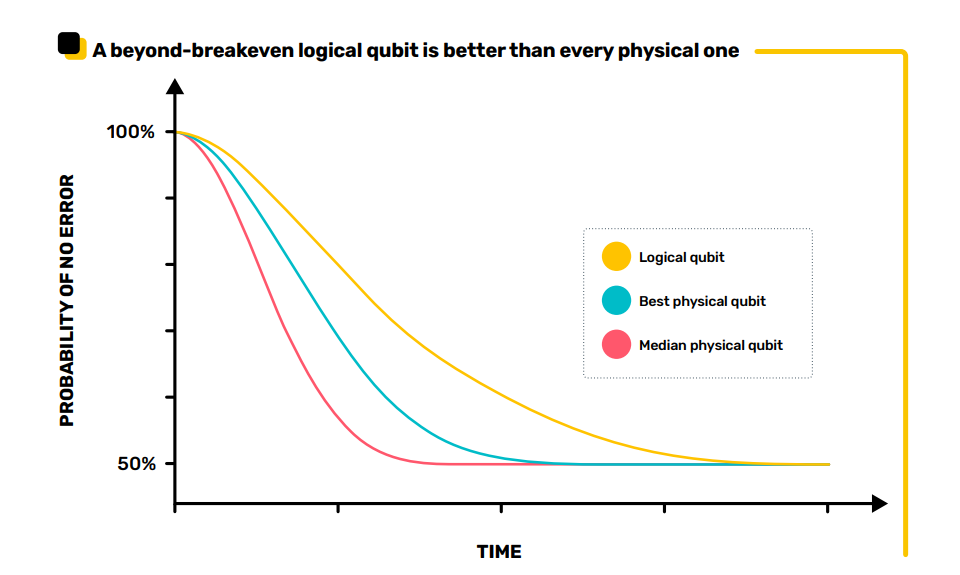
The proposed framework outlines five diagnostic thresholds for assessing quantum memory. These include: 1) Physical Breakeven, where logical qubit lifetime exceeds that of the best physical component; 2) Scalable Parameter Families, requiring that logical error rates decrease as physical resources are added; 3) Sufficient QEC Stabilization Cycles, ensuring that syndrome extraction rounds exceed the code distance; 4) Raw Performance without post-selection, prohibiting the filtering of failed experimental runs; and 5) Application-Relevant Utility, demonstrating that logical states can be sustained for the durations required by practical algorithms.
By implementing these benchmarks, the industry aims to ensure that logical qubit claims are based on robust, reproducible performance rather than filtered results. This standardization is critical for proving that quantum error correction is actively providing net-positive utility for complex, long-running computations.
Source: quantumcomputingreport.com
Publication date: 06.06.2026
Author: Mohamed Abdel-Kareem
- Log in to post comments