Alice & Bob Proposes Decoupled AI Topologies to Resolve Microsecond Control Loop Latencies for Superconducting Cat Qubits
Bosonic hardware developer Alice & Bob has unveiled a new architectural blueprint designed to tackle the critical latency challenges inherent in fault-tolerant quantum computing (FTQC) stacks. Authored by senior architect Kevin D. Kissell, the proposal introduces a "decoupled" processing methodology that allows high-speed superconducting cat qubit systems to utilize AI-driven error mitigation without violating the strict 1-microsecond execution loop required for stable performance.
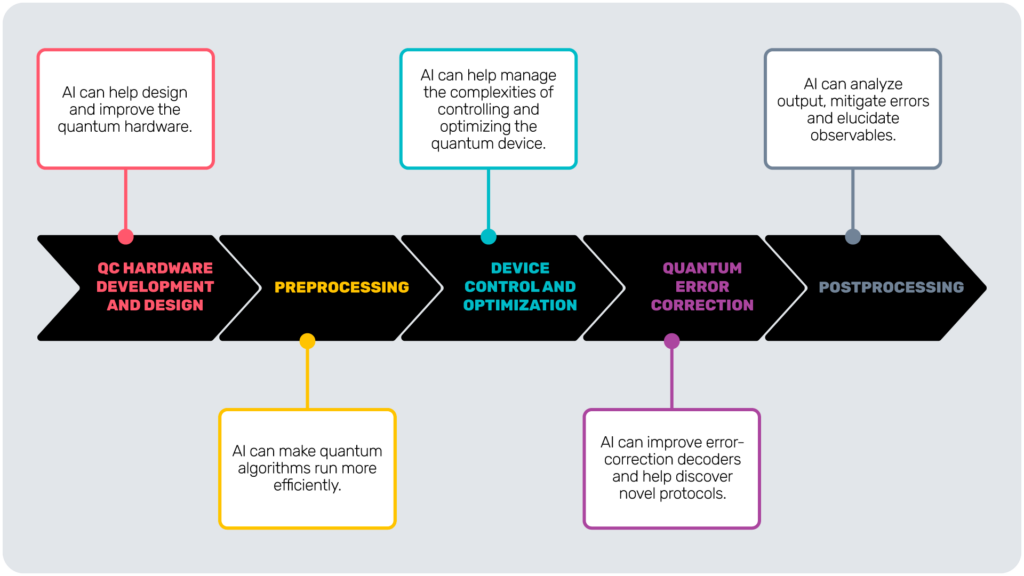
The core innovation involves splitting the control stack into two parallel, autonomous channels. A synchronous real-time loop, localized within FPGA or ASIC blocks adjacent to the QPU, handles immediate syndrome execution within the mandatory microsecond budget. Concurrently, an asynchronous decoupled loop duplicates classical measurement signals using NVIDIA NVQLink and CUDA-Q technology. This secondary channel offloads complex AI trend profiling, live calibration, and machine learning classifiers to external high-performance hardware, bypassing the context-switching latencies that typically disrupt quantum control.
By separating high-level optimization from low-level feedback, Alice & Bob aims to stabilize bosonic cat states while integrating advanced AI analytics. The firm is currently exploring various software implementation methods, including low-level RDMA replicators and specialized API agents, to transition this decoupled framework into a standard hardware production blueprint.
Source: quantumcomputingreport.com
Publication date: 27.06.2026
Author: Mohamed Abdel-Kareem
- Log in to post comments